
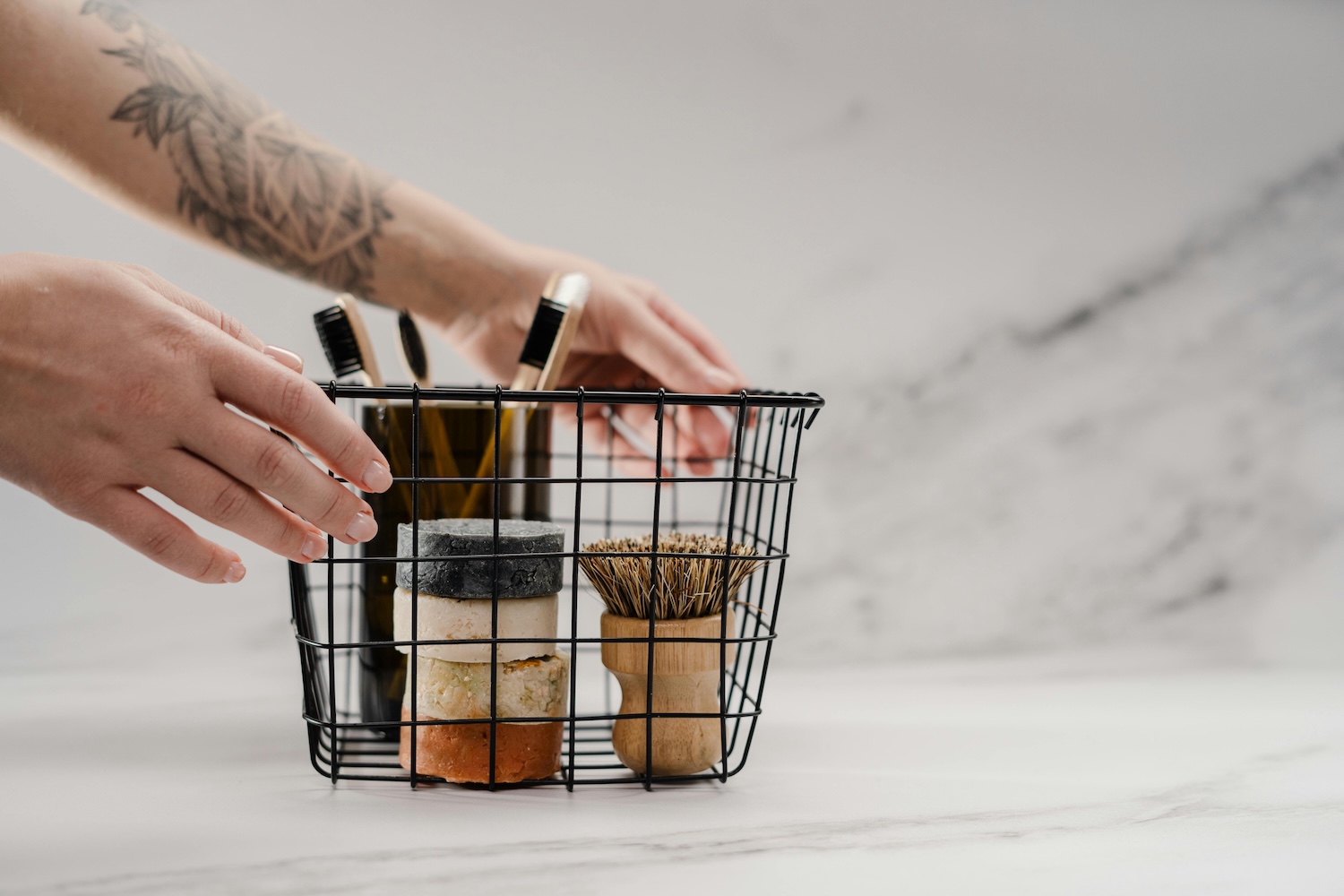
Living in a small home makes you more aware of what you bring inside. When space is limited, every item stays visible, gets used often, and becomes part of your daily environment. That’s why choosing non-plastic essentials for small homes and non-toxic essentials matters more in compact spaces than anywhere else.
This isn’t about replacing everything at once or aiming for perfection. It’s about choosing safer, longer-lasting items that reduce clutter, exposure, and waste over time — especially in homes where every object has a daily impact.
Table of Contents
1. Glass Storage Instead of Plastic Containers
Plastic food containers scratch, stain, and wear out quickly. In small kitchens, this leads to frequent replacements and visual clutter from mismatched pieces.
Glass storage containers with airtight lids last longer, don’t absorb odors, and can be used for storing, reheating, and serving. Because they stack neatly and stay clear over time, a simple glass set often replaces an entire drawer of aging plastic containers.
👉 View glass food storage containers on Amazon
2. Stainless Steel Tools for Everyday Use
Many kitchen and cleaning tools are made from mixed plastics that degrade with heat and use. Stainless steel alternatives are more durable, easier to clean, and don’t release microplastics during daily routines.
In small homes, tools that last matter more than tools that look trendy. Items like stainless steel measuring cups, mixing bowls, dish racks, and cleaning brushes stay functional for years without taking up extra space.
👉 See stainless steel kitchen measuring cups
3. Natural Fiber Cleaning Tools
Plastic sponges and scrubbers wear out quickly and shed particles into water systems. Natural fiber alternatives are safer, longer-lasting, and often work better in small, focused cleaning routines.
Good options include wooden dish brushes with replaceable heads, natural loofah or coconut scrubbers, and cotton or cellulose sponges. These tools dry quickly, store easily, and don’t add clutter under the sink.
👉 See wooden dish brush with replaceable head
4. Cotton and Linen Textiles for Daily Use
Textiles are one of the easiest areas to reduce plastic. Many towels, cloths, and cleaning rags contain synthetic fibers that shed microplastics with every wash.
Organic cotton or linen cloths work well for cleaning, drying, and everyday kitchen use. They fold flat, wash easily, and age better than synthetic alternatives. A small stack of quality cloths often replaces disposable paper products entirely.
👉 Shop cotton and linen cleaning cloths
5. Wood and Bamboo Over Coated Plastics
For cutting boards, utensils, and storage accessories, wood and bamboo are safer alternatives to coated plastics. They’re naturally antibacterial, gentle on surfaces, and visually calmer in small spaces.
Choosing a few well-made wooden items reduces the need for frequent replacements and lowers visual noise. In compact homes, fewer durable items create a calmer, more intentional environment.
👉 See this wooden cutting board
6. Simple Materials Support Simple Routines
One of the biggest benefits of non-plastic items is how they simplify daily life. Fewer materials mean fewer cleaning rules, fewer replacements, and fewer decisions.
When your home is filled with simple, durable materials, routines become easier and maintenance drops naturally. This is minimalism in practice — not by removing everything, but by choosing better.
7. Related Articles
- Minimalism for Small Homes: 6 Essential Items That Support a Calm Space
- 10 Space-Saving Essentials Every Small Apartment Needs (2026 Guide)
- 20 Smart Storage Ideas for Small Bathrooms
- How to Arrange a Living Room With No Space
This article contains affiliate links. If you purchase through these links, I may earn a small commission at no extra cost to you.